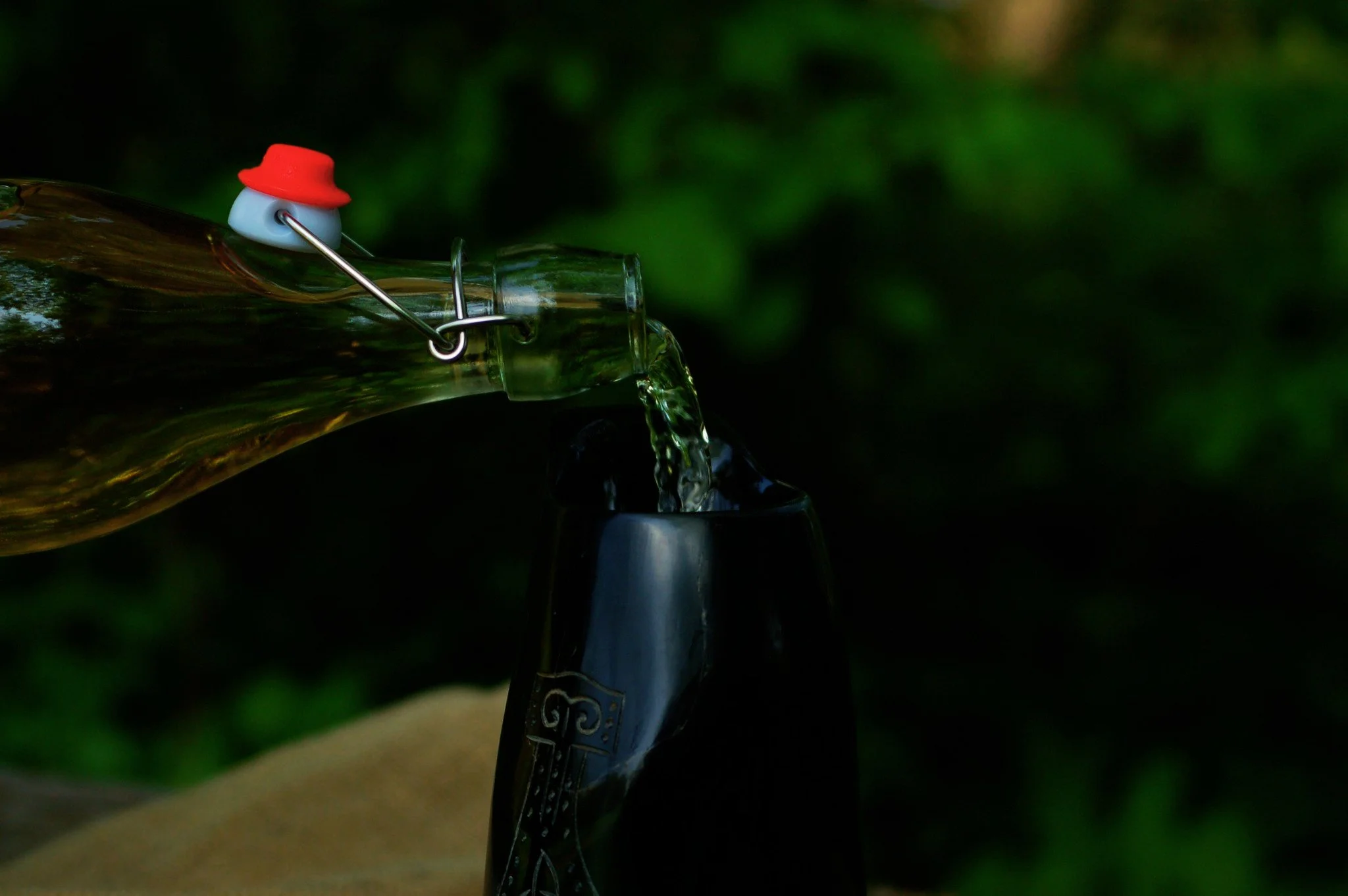
The significance of Mead
Mead in History
Mead's story stretches back further than recorded history, making it arguably the oldest alcoholic drink known. Archaeological evidence points to fermented honey beverages in northern China as early as 7000BC. Across the globe, ancient cultures independently discovered this delightful brew. For longer than memory serves, mead has been the drink of heroes and hearth-keepers alike. Across the ages, mead has flowed through the veins of civilizations, from the grand feasts of kings to the quiet celebrations of families. And in the divine halls of Norse mythology, mead takes on an almost divine quality. The Mead of Poetry, crafted from the blood of a wise being, a magical draught that could imbue the drinker with the gifts of verse and knowledge. It was a treasure sought by Odin himself, a testament to the potent inspiration that this humble honeywine could hold.
Mead in Legend
Mead held a significant place in Norse culture, that extended beyond mere refreshment. It was the drink of the gods in Asgard, with tales like the Mead of Poetry illustrating its divine origins and the inspiration it could bestow. Sagas recount heroes and kings drinking mead in grand mead halls during feasts, celebrations, and important social gatherings, solidifying alliances and fostering camaraderie. While perhaps not an everyday staple for all due to the resources required, mead was certainly present in daily life, from fortifying warriors before battle to being enjoyed during quieter moments of storytelling and fellowship around the hearth. The act of sharing mead was deeply ingrained in their social fabric, symbolizing hospitality, honor, and connection within the community.
The History of Beekeeping
The practice of beekeeping boasts a long and fascinating history, with evidence of humans interacting with bees for honey dating back thousands of years, from ancient cave paintings depicting honey collection to early forms of hives in various civilizations. However, modern, sustainable beekeeping owes a significant debt to Anton Janša, a Slovenian beekeeper in the 18th century. Janša revolutionized beekeeping by designing hives that were more practical, movable, and allowed for better management of bee colonies, shifting practices towards a more harmonious relationship between humans and bees. Today, beekeeping is not just about harvesting the sweet bounty of honey; it plays a crucial role in our ecosystem. Bees are vital pollinators, essential for the reproduction of countless plant species, including many of the crops we rely on for food. Sustainable beekeeping practices ensure the health and vitality of bee colonies, recognizing that their well-being is intrinsically linked to our own food security and the health of our planet. Therefore, responsible honey harvesting goes hand-in-hand with the crucial work of supporting and protecting these invaluable insects.
Why Responsible Harvesting Helps Bees
Think of a beehive like a pantry. Bees diligently gather nectar to make honey, their food source for the lean winter months. In a well-managed hive, beekeepers carefully harvest only the excess honey, ensuring the colony always has ample stores to thrive. Without this responsible harvesting, the bees could produce so much honey that they literally run out of space in the hive. This overcrowding can lead to stress, disease, and ultimately, the colony swarming – leaving their home in search of a new one, which is risky for their survival. So, by tending to the hives and taking some of the surplus, beekeepers are actually helping to maintain a healthy and balanced environment for the bees, ensuring their long-term well-being.
Descending into the depths... the sweet scent of honey grows thick.
OUR MEAD
Embergleam Mead
Traditional Dry Mead- 12.9% abv
A testament to honey alchemy. Brewed dry and pure, it reveals the magic inherent in the hive's gold. Through patient fermentation, sweetness transforms into a crisp, clean warmth, a subtle gleam that lingers like the touch of sun on a summer meadow.